Milan, Italy
Tourism Offices/Information:
YesMilano Tourist Information
Milan has several tourist information points, including locations near the Duomo, Central Station and other central areas. YesMilano serves as the official tourism portal for the city, providing maps, event listings, tour information and practical visitor resources.
The main information center is near Piazza del Duomo, with additional points at Milano Centrale railway station and other high-traffic locations.
Public Transportation:
Milan has an extensive public transportation network operated by ATM, including metro lines, trams, buses and suburban rail connections. The metro has four lines (M1, M2, M3, M4, M5) that cover the city center and extend into the suburbs, with trains running from approximately 6 a.m. to midnight, and later on weekends.
Trams and buses complement the metro, with some lines running 24 hours. The Milano Centrale railway station connects Milan with other Italian and European cities. Tickets are available at stations, newsstands and through mobile apps, with options for single rides, day passes and multi-day cards.
Emergency Information:
European emergency number: 112
The number 112 can be used to request police, fire or emergency medical assistance.
Additional numbers: Ambulance 118, Police 113, Carabinieri 112, Fire 115
Hospital: Policlinico di Milano, Via Francesco Sforza 35, 20122 Milan, one of the city’s largest and oldest hospitals with emergency services.
Public Restrooms:
Public restrooms are available at major train stations, shopping centers, museums and some public parks in Milan. Many cafés and restaurants have facilities for customers. Some public restrooms charge a small fee, particularly in high-traffic tourist areas.
Currency:
Euro
Points of Interest:
Duomo di Milano
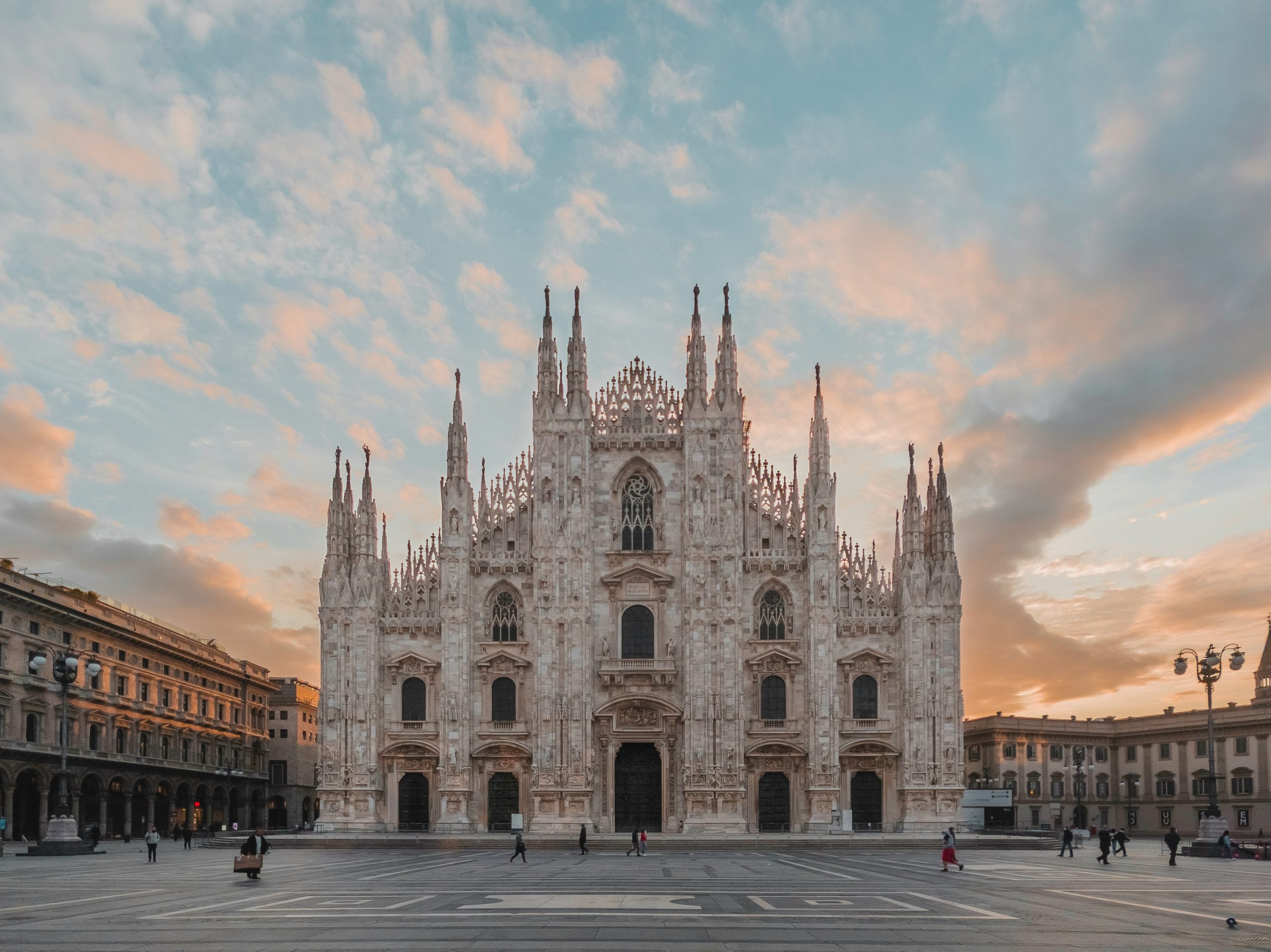
The Duomo di Milano is one of the largest Gothic cathedrals in the world and the central landmark of Milan. Construction began in 1386 and continued for nearly six centuries, resulting in an elaborate façade with thousands of statues and spires. Visitors can access the rooftop terraces for views over the city and, on clear days, the Alps.
Galleria Vittorio Emanuele II
The Galleria Vittorio Emanuele II is a 19th-century covered shopping arcade connecting Piazza del Duomo with Piazza della Scala. Known for its glass-and-iron dome and mosaic floors, it houses historic cafés, luxury boutiques and bookshops, and is one of Milan’s most recognizable architectural spaces.
Castello Sforzesco
Castello Sforzesco is a large Renaissance fortress in central Milan that was once the residence of the Sforza dynasty. Today it houses several museums including the Museum of Ancient Art, the Museum of Musical Instruments and the Egyptian Museum, and is surrounded by Parco Sempione, one of the city’s largest green spaces.
Teatro alla Scala
Teatro alla Scala is one of the world’s most famous opera houses, opened in 1778 and home to performances by some of the greatest composers and performers in history. The attached museum displays costumes, set designs and historical instruments, and guided tours are available when performances are not in session.
Pinacoteca di Brera
The Pinacoteca di Brera is one of Italy’s most important art galleries, housing works by Caravaggio, Raphael, Mantegna, Hayez and other major Italian and European artists. The gallery is located in the Brera district, known for its narrow streets, art studios and cafés.
Navigli District
The Navigli are Milan’s historic canal system, originally designed in part by Leonardo da Vinci. The Naviglio Grande and Naviglio Pavese are lined with restaurants, bars, art galleries and antique shops, and the area is especially lively in the evenings and on weekends when markets and events are held.
Monuments and Sculptures/Statues:
Madonnina Statue
The Madonnina is a gilded copper statue of the Virgin Mary that sits atop the highest spire of the Duomo. Installed in 1774, it has become a symbol of Milan and is visible from many points across the city.
Monument to Leonardo da Vinci
Located in Piazza della Scala near Teatro alla Scala, this monument honors Leonardo da Vinci and includes statues of his students. It is a well-known meeting point and a reminder of Leonardo’s long association with Milan.
Arco della Pace
The Arco della Pace is a neoclassical triumphal arch at the entrance to Parco Sempione, built in the early 19th century to celebrate European peace. The arch and surrounding park are popular for walks and outdoor events.
Unusual Activities:
View Leonardo’s Last Supper
Leonardo da Vinci’s Last Supper is housed in the refectory of Santa Maria delle Grazie, a UNESCO World Heritage site. Viewing requires advance reservation with strictly timed entry, making it essential to book well ahead of a visit.
QC Terme Milano
QC Terme Milano is a thermal spa complex in a restored historic tram depot near Porta Romana. It offers indoor and outdoor pools, saunas and wellness treatments, providing a relaxing break from sightseeing in the city center.
Unusual Attractions:
Cimitero Monumentale
The Cimitero Monumentale is Milan’s main cemetery and an open-air museum of sculpture and architecture. Many of Italy’s most prominent artists and architects contributed monuments, making it an unexpected but rewarding cultural visit.
Shopping:
Milan is one of the world’s fashion capitals, with the Quadrilatero della Moda (Fashion Quadrangle) near Via Montenapoleone hosting flagship stores for Italian and international luxury brands. For more accessible shopping, Corso Buenos Aires offers a long stretch of mid-range stores, and the Navigli area hosts antique and vintage markets on Sundays.
Foods to Try:
Milanese cuisine combines northern Italian traditions with influences from across Lombardy. Here are a few local specialties to try:
Risotto alla Milanese – Creamy saffron risotto, one of Milan’s signature dishes, traditionally served with ossobuco.
Ossobuco – Braised veal shanks cooked slowly with vegetables, wine and broth, often served with risotto or polenta.
Cotoletta alla Milanese – A breaded and pan-fried veal cutlet, similar to a schnitzel but traditionally made with bone-in meat.
Panettone – A sweet bread with candied fruit and raisins, traditionally associated with Christmas but available year-round in Milan’s bakeries.
Aperol Spritz – While not unique to Milan, the Aperol Spritz is central to the city’s aperitivo culture, where evening drinks are served with complimentary snacks.
Walking Routes:
Duomo to Castello Sforzesco
Start at Piazza del Duomo, walk through the Galleria Vittorio Emanuele II to Piazza della Scala, then continue north through Via Dante to Castello Sforzesco and Parco Sempione. This route connects several of Milan’s main landmarks in about 20 to 30 minutes on foot.
Brera District Walk
Explore the Brera neighborhood with its narrow streets, art galleries, the Pinacoteca di Brera and the Orto Botanico di Brera botanical garden. The area has a bohemian atmosphere with many cafés and small shops.
Navigli Canal Walk
Walk along the Naviglio Grande from the Darsena area, passing restaurants, art studios and antique shops. The route is especially pleasant in the late afternoon and evening, and on Sundays when the antique market is open.